
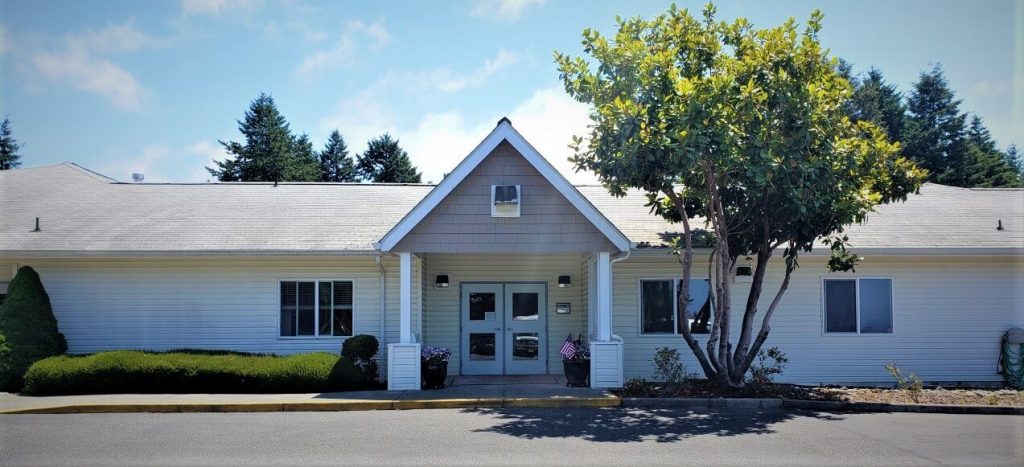
If you are searching for memory care in Brookings, chances are something changed recently. Maybe Mom left the stove on twice in one week. Maybe Dad drove to the grocery store and couldn’t remember how to get home. Or maybe you have been the main caregiver for a long time, and you are running out of strength.
This guide is for families on the southern Oregon coast who are trying to figure out what memory care is, what a good community looks like, and how to choose one. We are Monarch Gardens, a memory care community in Brookings, so we will tell you plainly how we work. We will also give you the questions to ask anywhere you tour, including here.
Short Answer: Memory care is long-term residential care for people with Alzheimer’s or another dementia, with a secure setting and trained staff available around the clock. It fits when dementia is the main reason a person needs help and safety at home is slipping. Monarch Gardens in Brookings, Oregon offers memory care only, with dementia-trained staff, RN care coordination, meals, and daily activities. Costs depend on room type and level of care, and Medicare generally doesn’t cover it. Touring in person and checking the state license are the best ways to choose. |
What is memory care?
Memory care supports people with Alzheimer’s disease, vascular dementia, Lewy body dementia, frontotemporal dementia, and other forms of cognitive loss. Residents live in a secure, calm setting where trained staff help with daily tasks, manage medications, and build the day around what the person can still enjoy. It sits between assisted living and a nursing home, focusing on dementia-specific needs: confusion, wandering, mood changes, and the need for gentle supervision at all hours.
The Alzheimer’s Association describes these settings as special care units, also called memory care units, and suggests families look closely at staff dementia training, family involvement in care planning, and how the community handles changing needs.
What memory care in Brookings includes at Monarch Gardens

At Monarch Gardens, memory care includes 24-hour dementia-trained staff, nursing oversight, and everyday services that ease pressure on families. Each resident gets a personalized Plan of Care, built with family and physicians before move-in and updated at regular care conferences. Memory care services and amenities cover:
Area of care | What it looks like at Monarch Gardens |
|---|---|
Staffing | 24-hour care staff with specialized dementia training |
Nursing | Care coordination by Registered Nurses |
Health support | Medication management and transportation to medical appointments |
Daily living | Help with activities of daily living, weekly housekeeping and weekly laundry |
Dining | Chef-prepared, family-style meals using seasonal menus and local produce |
Home and grounds | Landscaped courtyard with walking paths, a large activity room and common areas; all utilities included |
Life Engagement | A monthly calendar with exercise and group fitness, arts and crafts, pet therapy, games, gardening, live music and local outings |
Residents live in private or semi-private rooms, shown on our memory care living options page. Our Life Engagement program plans activities around each person’s history and abilities, so the day has purpose, not just structure. A retired fisherman may enjoy sorting tackle, and a lifelong gardener may light up in the courtyard beds.
Memory care vs. assisted living vs. nursing home
Memory care fits when dementia is the main reason a person needs help. Assisted living suits someone who needs daily support but is safe without constant supervision. A nursing home suits someone who needs skilled nursing every day.
Factors | Assisted living | Memory care | Nursing home |
|---|---|---|---|
Who it serves | Older adults who need some help with daily tasks | People living with Alzheimer’s or another dementia | People with complex medical needs or recovering from serious illness |
Supervision | Staff available, residents come and go | Secure setting with 24-hour dementia-trained staff | 24-hour licensed nursing |
Daily structure | Resident sets the routine | Staff guide a calm, predictable routine | Built around medical care and therapy |
Activities | General social calendar | Designed for memory, senses, and motor skills | Varies, often limited by health |
Monarch Gardens offers memory care only. We do not offer general assisted living, independent living, or in-home care. If your loved one is in assisted living now and you are wondering whether it still fits, our post on when to move from assisted living to memory care walks through the signs.
Signs it may be time to look at memory care
It may be time to look at memory care when safety at home is slipping or when the caregiver can no longer keep up. There is rarely one dramatic moment. Usually it is a pile of small ones.
- Your loved one has wandered, gotten lost on a familiar route, or tried to leave the house at night.
- Medications are missed, doubled, or confused.
- Meals are skipped, or food in the fridge has gone bad without being noticed.
- Hygiene and housekeeping have slipped in ways that are out of character.
- Agitation, suspicion, or evening confusion (often called sundowning) is getting harder to manage.
- The family caregiver is exhausted, missing work or having health problems of their own.
If you recognize several of these, it is worth touring now, even if you are not ready to decide. Visiting before a crisis gives you time to compare and lets your loved one meet staff while things are calmer.
Memory care near me: options in Brookings and Curry County
Brookings is a small coastal city near the California line, so families searching for “memory care near me” or “memory care facilities near me” will find only a few options close by. Some look north toward Gold Beach or south into Crescent City, and others consider the Rogue Valley, a drive over the mountains each visit. Staying in Curry County keeps your loved one near familiar places like the Chetco River, Azalea Park, and the Highway 101 beaches. It also makes short, frequent visits possible, and a twenty-minute stop after work often does more good than one long visit a month. Doctors stay the same, friends can drop by, and you can be there quickly if something changes.
How to choose a memory care community in Brookings
The best way to choose is to tour in person, ask direct questions, and check the public record.
- Check the license. Oregon’s Department of Human Services has a licensed long-term care settings search for inspection reports and violations. Monarch Gardens is licensed through the Oregon Department of Human Services.
- Ask about dementia training. Find out what caregivers receive, whether it is ongoing, and who staffs nights and weekends.
- Meet the nurse and the Executive Director. Know who makes care decisions and how families reach them.
- Watch the residents. Are people engaged, and do staff speak calmly and at eye level?
- Eat a meal there. Mealtime says a lot about daily care.
- Ask how care plans change. Find out what happens when needs increase and whether hospice can come in.
- Visit more than once. Try a different time of day.
Bring our printable tour checklist to every community you visit, including ours.
What affects the cost of memory care in Brookings
Cost depends on room type, the level of daily help a resident needs, and what the monthly rate includes. Monarch Gardens gives a personalized quote after an assessment. When you compare communities, ask:
- Is the room private or semi-private?
- How often is the level of care reviewed?
- What does the rate cover? At Monarch Gardens, it includes utilities, meals, housekeeping, laundry, medication management, medical transportation, and Life Engagement activities.
- What could be added later as needs change?
Medicare generally does not cover memory care. Many families use private funds, long-term care insurance, or veterans benefits. For current rooms and rates, call (541) 299-5312.
Respite and hospice support at Monarch Gardens

Monarch Gardens offers short-term respite stays as well as long-term memory care. Respite gives a family caregiver time to rest, travel, or recover from their own surgery while their loved one stays somewhere safe. It is also a gentle way to try memory care before making a permanent decision.
When a resident nears the end of life, our nursing team and caregivers work with hospice providers so the resident can stay in a familiar place with people they know. Our article on hospice for dementia explains how that care works and what families can expect.
Helping your loved one with the move
Many people with dementia resist the idea of moving, and that is normal. Fear of change, loss of control, and confusion about why the move is happening all play a part.
A few things tend to help. Keep explanations short and kind. Bring familiar items like a quilt, photos, and a favorite chair. Try to move during the person’s best time of day. And plan to visit often in the first few weeks, while staff learn your loved one’s routines and preferences.
If your parent is refusing outright, read our guide to positive approaches when a dementia patient refuses to go into care. It has practical ways to lower the stress for everyone.